NPI Score Growth Guide: Personalized Strategies After Narcissist Test Results
You’ve completed the narcissist test and received your NPI score. Now what? It's common to feel a mix of curiosity, concern, and uncertainty after seeing your results. You might be asking yourself, "What does this number actually mean for my life?"
Beyond the score lies a powerful opportunity for personal growth. This guide is designed to transform your assessment results into actionable strategies. It will help you understand the nuances of your score and offer targeted exercises to foster greater self-awareness and healthier relationships. If you haven't taken the assessment yet, you can get your initial score by taking our free narcissist test.

This journey isn't about judgment; it's about exploration. By using your NPI score as a starting point, you can begin a path toward meaningful change and a richer life.
Understanding Your NPI Score Components
Your score on the Narcissistic Personality Inventory (NPI) is more than just a single number. It represents a profile across several key traits associated with narcissism. Understanding these components is the first step toward effective self-improvement. It allows you to move from a general label to specific, manageable areas for growth.
Breaking Down the NPI Subscales: What Your Score Really Means
The NPI is a well-researched tool that measures different facets of narcissism. While different versions exist, they generally assess traits that fall into a few key domains. When you see a high score in a specific area, it doesn't define you. Instead, it highlights a tendency that you can explore further.
Common subscales or themes measured by the NPI include:
- Authority/Leadership: A desire to be in charge, lead others, and have your opinions respected. A healthy level of this trait can drive ambition and success.
- Entitlement/Exploitativeness: The belief that you deserve special treatment and a willingness to use others to achieve your goals. This is often a core area for self-reflection.
- Superiority/Arrogance: A feeling of being better, more talented, or more important than other people.
- Exhibitionism/Self-Absorption: A strong need to be the center of attention and a focus on your own needs and feelings.
- Vanity: A focus on physical appearance and a need for admiration for your looks.
By identifying which of these areas contributed most to your overall score, you can create a more targeted plan for personal growth.
The Difference Between Traits and Pathology: Clinical vs. Everyday Narcissism
This is a critical distinction. Having some narcissistic traits is a normal part of the human personality. Confidence, ambition, and a desire for recognition can be healthy motivators. The NPI test you took measures these traits on a spectrum. A high score indicates strong narcissistic tendencies, not a clinical diagnosis.
Narcissistic Personality Disorder (NPD), on the other hand, is a formal clinical diagnosis. It's defined in the Diagnostic and Statistical Manual of Mental Disorders (DSM-5) as a pervasive, long-term pattern of grandiosity, a need for admiration, and a lack of empathy that significantly impairs a person's life and relationships.
Our tool is designed for self-reflection and educational purposes only. It is a preliminary screening, not a diagnostic instrument. If your results cause you distress or you believe you may have NPD, seeking advice from a qualified mental health professional is essential. For an initial insight, our online assessment is a great starting point.
Targeted Growth Strategies Based on Your NPI Results
Once you understand your NPI score's components, you can begin to apply specific strategies for growth. The goal is not to eliminate these traits. Instead, you'll learn to channel them in healthier ways and develop counterbalancing skills like humility and empathy.

For High Entitlement Scores: Developing Humility Practices
A high entitlement score suggests you believe you deserve special treatment and that rules don't apply to you. This mindset often creates conflict and resentment in relationships. To counter this, you can practice humility.
- Practice Gratitude: Each day, write down three things you are thankful for, focusing on what others have done for you. This shifts your focus from what you feel you are owed to what you have been given.
- Do Something for Someone Else Anonymously: Buy a coffee for the person behind you, or complete a task for a coworker without seeking credit. This helps detach your actions from the need for recognition.
- Listen to Understand, Not to Respond: In conversations, make a conscious effort to fully hear the other person's perspective before formulating your own response. Ask clarifying questions to show you value their viewpoint.
Managing Exhibitionism Tendencies: Channeling the Need for Recognition
A need for the spotlight isn't inherently bad; it fuels performers, leaders, and innovators. However, it can exhaust those around you when it becomes an overwhelming need for attention at all times.
- Find Healthy Outlets: Engage in activities where being the center of attention is appropriate. Consider public speaking, performing arts, or leading a team project. This provides a structured outlet for your exhibitionistic energy.
- Share the Spotlight: Make a deliberate effort to highlight the contributions of others. In a meeting, praise a colleague's idea. In a social setting, ask someone about their accomplishments and listen actively.
- Practice Active Silence: Challenge yourself to go through a social gathering or a team meeting by primarily listening. This helps build the muscle of observation over participation and can increase your awareness of group dynamics.
Addressing Exploitative Behaviors: Building Authentic Relationships
This trait involves using others to get what you want, often without regard for their feelings. It is one of the most damaging traits in relationships. Building empathy is the key to addressing it.
- "Walk a Mile in Their Shoes": Before asking for a favor or making a request, pause. Ask yourself: "What is this person's situation right now? What might they be feeling? How will my request impact them?"
- Focus on Win-Win Outcomes: In any interaction, from negotiating a work deadline to deciding on weekend plans, actively look for a solution that benefits everyone involved, not just you.
- Apologize Meaningfully: If you realize you have taken advantage of someone, offer a sincere apology. A true apology means acknowledging the specific action, showing you understand its impact, and committing to changing your behavior—without making excuses.
Therapist-Recommended Exercises for Self-Reflection
Beyond targeted strategies, incorporating broader therapeutic exercises can create lasting change. These techniques help you build a stronger foundation of self-awareness and emotional regulation.
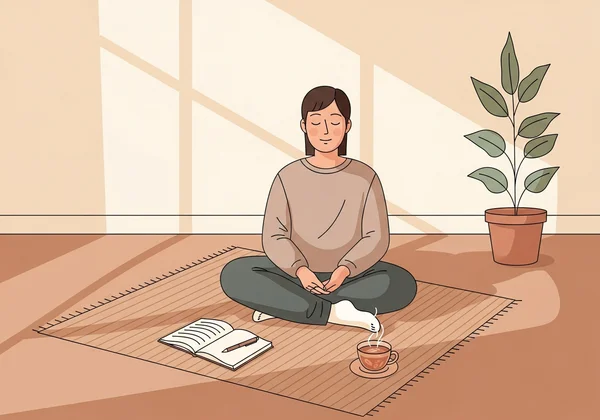
Mindfulness Techniques to Reduce Self-Centered Thinking
Narcissistic traits often stem from a constant internal monologue focused on the self. Mindfulness helps you step outside of that loop and observe your thoughts without judgment.
- Mindful Breathing: Spend five minutes each day focusing only on your breath. When your mind wanders to thoughts about yourself, your plans, or your worries, gently guide it back to the sensation of breathing. This trains your brain to detach from self-centered thought patterns.
- Loving-Kindness Meditation: This practice involves directing well-wishes toward yourself and others. Start by silently repeating phrases like, "May I be happy. May I be healthy." Then, extend these wishes to loved ones, neutral people, and eventually, even those with whom you have difficulty. This practice directly cultivates empathy and compassion.
Boundary Setting Workbooks for Healthier Interactions
Understanding and respecting boundaries—both your own and others'—is fundamental to healthy relationships. People with strong narcissistic traits often struggle with this.
- Identify Your Own Boundaries: Use a journal to write down your physical, emotional, and time-related limits. What behaviors are you not okay with? How much of your time are you willing to give? Knowing your own limits is the first step to recognizing them in others.
- Practice Saying "No" Gracefully: Start with small, low-stakes situations. Politely decline a request you don't have time for. You don't need a long explanation. A simple, "I'm sorry, but I can't commit to that right now," is enough.
- Observe Others' Boundaries: Pay close attention to verbal and non-verbal cues. If someone seems hesitant, tired, or uncomfortable, respect that signal. Ask, "Is now a good time?" before launching into a request. This demonstrates respect for their autonomy. If you're curious about your own patterns, it might be time to start your test.
Your Path to Personal Growth
Your NPI score isn't a fixed label—it's a snapshot of your current traits that can guide your growth. Understanding which tendencies need balancing is the first step toward stronger relationships and greater self-awareness. By implementing targeted strategies for humility, sharing the spotlight, and building empathy, you can transform challenging tendencies into strengths.
Remember, personal growth is a continuous process. The exercises and strategies in this guide are tools to help you along the way. Be patient and compassionate with yourself as you practice. Each small step toward greater self-awareness contributes to more authentic connections and a more fulfilling life.
Growth is ongoing, and your narcissist test results can serve as a reference point. Start implementing the strategies that speak to you most, and consider retaking the assessment in a few months to measure your progress. You can always return to our narcissist test in the future to track your progress and gain new insights.
FAQ Section
Can my NPI score change over time with intentional work?
Absolutely. Personality traits are not set in stone. With consistent effort, self-reflection, and applying strategies like those outlined above, you can reduce problematic narcissistic tendencies and improve your relationships. Retaking the narcissist assessment after a period of dedicated work can be a great way to measure your progress.
How long should I practice these growth strategies before seeing results?
Change takes time and consistency. You may notice small shifts in your mindset and interactions within a few weeks. However, significant, lasting change often takes several months or more. The key is to be patient with yourself and focus on the process rather than demanding immediate results.
When should I consider seeking professional help beyond self-guided exercises?
If your narcissistic traits are causing significant distress in your life, damaging your relationships, or impacting your work, consider seeking help. A licensed therapist or counselor can provide valuable support. They can also offer a formal diagnosis if needed and create personalized therapeutic interventions that go deeper than self-help exercises.
Can these strategies help me understand a narcissist in my life?
Yes, this guide can provide valuable insight into the mindset and behaviors associated with narcissism. Understanding the underlying drivers, such as a need for admiration or a sense of entitlement, can help you depersonalize their actions. However, remember that you cannot change another person. These strategies are most effective for your own growth and for developing healthier coping mechanisms, like setting boundaries.