Narcissistic Red Flags in Dating: 8 Early Signs
Feeling a bit dizzy from a new romance? It can be thrilling when someone new sweeps you off your feet. But sometimes, that whirlwind of intense charm and constant attention can leave you feeling more confused than comforted. Are their grand gestures genuine, or is something else going on?
If you're asking this question, you're already taking a wise step toward protecting your emotional well-being. Understanding the early signs of certain personality traits can help you navigate the dating world with more confidence. This article will walk you through eight common red flags to watch for. Spotting these early? Smart move. Tools like gain some clarity can help you dig deeper into your own patterns.

Spotting Narcissistic Red Flags in Early Dating
In the beginning, many self-admiring behaviors can be mistaken for simple passion or confidence. However, they often reveal a pattern that is less about love and more about control and self-admiration. Here are four overt signs to look for.
The "Love Bombing" Phenomenon: Intense & Too Good to Be True?
Love bombing is one of the most common signs you might see in an early relationship. It’s an overwhelming display of affection, attention, and flattery right from the start. Picture this: 'Soulmate' talk after date two. Unsolicited fancy gifts. Non-stop texts all day.
It feels romantic at first. But the goal? Hooking you fast. Once you're in, the attention fades. Suddenly, you're chasing that 'perfect' spark.
Grandiosity and Entitlement: Always the Center of Attention
Does your date dominate every conversation? People with these strong tendencies often have an inflated sense of self-importance. They talk endlessly about their accomplishments, connections, and how special they are. They believe they are superior to others and deserve only the best.
This isn't the same as healthy self-confidence. A confident person is secure in themselves without needing to put others down. In contrast, a grandiose individual needs constant validation. They expect you to be their admirer, not their equal partner. Pay attention if they dismiss your achievements or seem bored when the conversation isn't about them.

Lack of Empathy & Superficial Charm: A Thin Façade
These individuals can be incredibly charming and charismatic, which is how they draw people in. However, this charm is often a performance. People with these traits struggle with empathy. They can't truly get – or care about – your feelings.
You might notice this when you share something you're struggling with. They may offer a generic response, change the subject back to themselves, or even tell you that your feelings are an overreaction. Their charm turns off the moment you require genuine emotional support. This emotional disconnect is a significant red flag in any relationship.
Quick to Criticize, Slow to Apologize: A One-Way Street
In a healthy relationship, both partners can admit when they are wrong. With someone exhibiting these patterns, accountability is often a one-way street. They are quick to point out your flaws, often disguised as "jokes" or "helpful advice." These subtle criticisms are designed to slowly erode your self-esteem.
Conversely, they rarely, if ever, apologize sincerely. If confronted with a mistake, they will likely deny it, shift the blame to you, or offer a fake apology like, "I'm sorry you feel that way." This refusal to take responsibility shows a lack of respect for you and the relationship.
Unmasking the Covert Narcissist: Subtle Early Signs
Not all of these behaviors are loud and obvious. Covert narcissism, also known as vulnerable narcissism, is much more subtle. These individuals may appear shy, insecure, or even overly helpful, but their underlying motivations are the same: a deep-seated need for admiration and control.
Playing the Victim: Constant Self-Pity and Manipulation
Someone with covert traits often gains attention by playing the victim. Their stories are filled with examples of how they've been wronged by past partners, bosses, and friends. They present themselves as sensitive and misunderstood, which can make you feel a powerful urge to protect and "save" them.
This victimhood is a form of manipulation. It elicits your sympathy and makes it difficult for you to express your own needs or frustrations without feeling guilty. If you feel like you're always walking on eggshells to avoid upsetting them, you might be dealing with this subtle red flag.
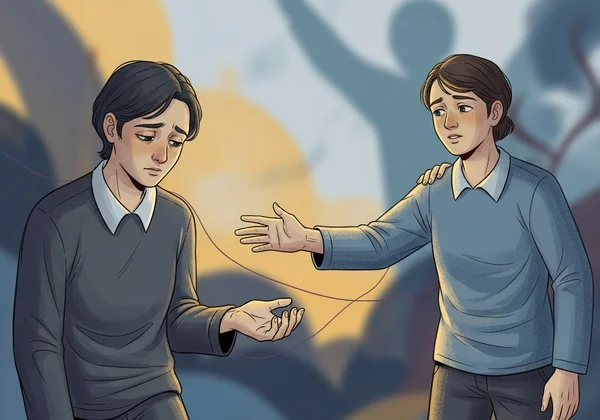
Passive Aggression and Backhanded Compliments
Instead of direct criticism, a person with these traits uses passive aggression. A classic example is the backhanded compliment. They might say something like, "I love that you're so relaxed about your career," implying that you're not ambitious.
These comments are designed to make you feel insecure while giving them plausible deniability. If you get upset, they can simply say, "It was just a joke!" or "You're being too sensitive." This is a quiet but powerful way to exert control and keep you off-balance.
The Shifting Blame Game: Never Their Fault
Just like their overt counterparts, people with covert traits are masters of avoiding blame. However, they do it in a more manipulative way. Instead of outright denying responsibility, they will subtly twist the situation to make it seem like you are the one at fault.
For example, if they are late for a date, they might say, "I'm so sorry, I was just so worried about that stressful meeting you have tomorrow that I lost track of time." Suddenly, their lateness is linked to their supposed concern for you, and you feel guilty for being upset.
Jealousy and Envy Disguised as Concern or Control
This person's insecurity often manifests as intense jealousy and envy. They may disguise this as concern for your well-being. They might question your friendships or discourage you from pursuing hobbies, framing it as them wanting to spend more time with you or protecting you.
In reality, this behavior is about control. They see your friends, family, and personal interests as a threat to their position as the center of your universe. Identifying these subtle patterns can be difficult, but it's crucial for understanding the dynamic you're in. If these behaviors seem familiar, it might be helpful to explore these traits further on your own.
Taking Protective Steps: Your Next Move in Dating
Recognizing red flags is the first step. The next is deciding how to respond in a way that protects your emotional health. Acting with awareness empowers you to build healthier relationships.
Trusting Your Gut: Why Initial Unease Matters
Your intuition is a powerful tool. If something consistently feels "off" about a person or a situation, even if you can't logically explain why, pay attention. That feeling of unease is your subconscious mind picking up on inconsistencies between what someone says and how they behave.
Don't dismiss your feelings as being "crazy" or "too sensitive"—phrases a manipulator might use against you. Your gut feelings are valid data points. Honoring them is the first step toward setting healthy boundaries and protecting yourself from potentially harmful dynamics.
Setting Healthy Boundaries Early On
Boundaries are the rules you set for how you want to be treated. Setting them early in a relationship is crucial. How they react to your boundaries is very telling. A healthy partner will respect your limits, even if they don't fully understand them.
A person with these traits will likely push back. They may ignore your boundary, argue against it, or make you feel guilty for having it. Start small. For example, if you need a night to yourself, say so clearly. Their reaction will tell you everything you need to know about their respect for your autonomy.
Seeking Clarity: Should You Take a Narcissist Assessment?
If you are seeing these red flags, you may be wondering what to do with this information. It's important to remember you cannot diagnose your partner. However, you can educate yourself to gain clarity on the behaviors you're experiencing. This is where an assessment can be a useful tool for personal insight.
An online test, often based on psychological frameworks like the Narcissistic Personality Inventory (NPI), isn't for labeling someone else. Instead, it can help you better understand the spectrum of these traits. By learning more about these patterns, you can feel more confident in your observations and make more informed decisions about your relationship. To get a better handle on these concepts, you can take a free assessment for educational purposes.

Navigating Early Dating with Awareness and Confidence
Dating can feel complex, but you don't have to navigate it in the dark. By learning to spot these early red flags—from overt love bombing to subtle manipulation—you're taking back your power. Remember that your feelings are valid, and trusting your gut is one of your strongest assets.
Stay sharp out there – it's not about judging, but keeping your heart safe for real connections. If you want to continue learning, start your journey toward greater understanding today.
Common Questions About Narcissistic Dating Patterns
Am I dating a narcissist?
You can't definitively know without a professional diagnosis, which is for Narcissistic Personality Disorder (NPD). However, you can identify patterns of this behavior. Look for a combination of the red flags mentioned above, such as a lack of empathy, a sense of entitlement, a constant need for admiration, and manipulative tendencies. If these behaviors are consistent and negatively impact your well-being, that is what matters most. For a structured look at these traits, this online test can provide helpful context.
What's the difference between confidence and narcissism in a new partner?
Confidence is rooted in self-worth and is generally quiet and humble; it doesn't need constant validation. A confident person can celebrate your successes and admit their own mistakes. Grandiosity, on the other hand, is rooted in insecurity and requires an external audience. It often involves putting others down to lift oneself up and an inability to handle criticism.
Can a person with these traits change their dating behaviors?
While anyone can change, it's a tough road for someone with these deep-seated patterns. Real change requires huge self-awareness, a genuine desire to do the work, and usually, intensive professional therapy. It's not your job to fix them. Your focus should always be on your own well-being and whether the relationship is healthy for you right now.
When should I consider ending a relationship due to these red flags?
This is a deeply personal decision. A good time to re-evaluate is when you notice your self-esteem is declining, you constantly feel anxious or confused, your boundaries are repeatedly ignored, or you feel emotionally drained. If the relationship is consistently taking more from you than it gives, it may not be a healthy environment for you to thrive in.