Malignant Narcissist Definition, Traits, Examples, and Safe Next Steps
The malignant narcissist definition is usually used to describe a severe, harmful pattern of narcissistic traits mixed with exploitation, aggression, cruelty, and a need for control. It is not a standalone clinical label in major mental-health manuals, and it should not be used as a casual insult. Still, the phrase can help people name a pattern that feels more hostile than ordinary vanity or self-focus. If you are trying to sort out narcissistic traits in yourself or someone close to you, a private narcissistic traits self-reflection tool can be a starting point for learning, not a final answer.

The Malignant Narcissist Definition in Plain English
A malignant narcissist is commonly described as someone whose narcissistic traits are paired with a persistent willingness to manipulate, intimidate, punish, or humiliate others to protect their own status. The word "malignant" matters because it points to harm. In everyday use, it suggests that the narcissistic pattern is not only self-centered but also destructive to people around the person.
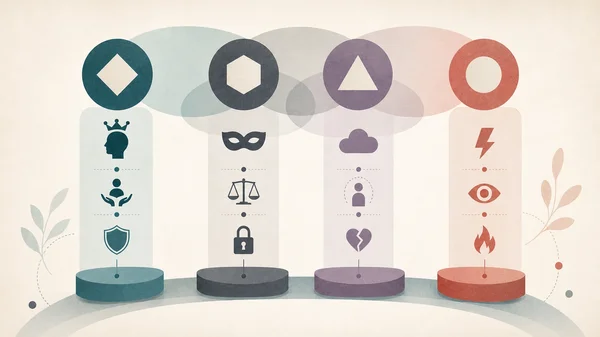
The core idea usually includes four overlapping themes: grandiosity, low empathy, aggression or cruelty, and paranoia or extreme suspiciousness. A person may seem charming at first, especially when admiration is flowing toward them. Over time, the pattern may shift toward domination, blame, threats, public shaming, calculated silent treatment, or revenge when they feel criticized.
This does not mean you can look at one argument, one cold facial expression, or one arrogant comment and know what someone "is." The safer way to use the definition is as a pattern lens: repeated behavior, impact on others, response to boundaries, and willingness to repair all matter more than a single dramatic moment.
Malignant Narcissist Traits That Set the Pattern Apart
Malignant narcissist traits often look like ordinary narcissistic traits pushed into a more hostile direction. The person may need admiration, expect special treatment, and believe their needs matter more than anyone else's. What makes the pattern more concerning is the added willingness to use fear, humiliation, deception, or punishment as tools.
Common traits people describe include:
- Grandiosity that demands loyalty, praise, or special exceptions.
- Exploitation, such as using people for money, status, labor, attention, or emotional supply.
- Low empathy, especially when another person's pain interferes with their goals.
- Cruelty, contempt, or enjoyment of another person's embarrassment.
- Paranoid thinking, where disagreement is treated as betrayal.
- Lack of accountability, with blame shifted back onto the person who was hurt.
- Retaliation after limits are set, including smear campaigns, threats, or sudden rejection.

A malignant pattern may also include a public-private split. In public, the person may appear polished, generous, successful, or funny. In private, they may belittle, monitor, rage, or rewrite events. That split can make the target feel confused because other people may only see the appealing side.
Malignant Narcissist Examples Without Turning Them Into Proof
Examples can make the definition easier to understand, but they should never become proof by themselves. A malignant narcissist example in a relationship might be a partner who alternates intense praise with contempt, then uses private fears as weapons during conflict. They may apologize only when they need access again, not because they show real concern for the damage.
At work, the pattern might look like a manager who takes credit for a team's results, assigns impossible tasks, then publicly humiliates the person who cannot meet them. If challenged, they may describe reasonable feedback as disloyalty and quietly damage the employee's reputation.
In a family, the pattern may appear as a parent or relative who demands obedience, mocks vulnerability, and frames every boundary as cruelty toward them. They may use guilt, inheritance, social image, or family roles to keep control.
Searches such as "malignant narcissist stare" or "female malignant narcissist stare" often come from people trying to decode unsettling nonverbal moments. A stare can feel cold, contemptuous, or intimidating, but eye contact alone is not a reliable sign of malignant narcissism. Stress, culture, conflict style, trauma history, neurodivergence, and ordinary anger can all affect facial expression. Focus on repeated behavior and safety, not gendered assumptions or one look.
Is Malignant Narcissism a Mental Illness?
Malignant narcissism is best understood as a descriptive construct, not a separate official diagnosis. Mental-health professionals may discuss it as a severe narcissistic pattern with antisocial, sadistic, aggressive, or paranoid features, but the phrase itself is not a standalone category in major manuals.
That distinction matters. Online content often treats "malignant narcissist" as a simple identity label, but real people and real relationships are more complex. Someone may show narcissistic traits without meeting criteria for a personality disorder. Someone else may behave in harmful ways because of substance use, trauma, mood problems, coercive beliefs, learned family patterns, or another issue. The harm still matters, but the label should be used carefully.
For readers, the practical question is often not "Which label is perfect?" but "What pattern am I seeing, what impact is it having, and what support do I need?" Educational tools, including a free narcissism education hub, can help organize observations, while a qualified professional can help with risk, distress, and complex relationship decisions.
What Causes Malignant Narcissism?
There is no single known cause of malignant narcissism. Research and clinical writing on narcissistic personality patterns often point to a mix of temperament, early relationships, attachment injuries, family modeling, shame, overvaluation, neglect, harsh control, and broader social reinforcement. Biology and personality development may also play a role.
It is tempting to look for one origin story because it makes the pattern feel more understandable. But an origin story does not excuse harmful behavior. A person may have experienced pain and still be responsible for threats, manipulation, intimidation, or abuse. For someone on the receiving end, understanding possible causes is less urgent than protecting emotional and physical safety.
If you are worried about your own behavior, the cause question can be useful in a different way. You can ask: What am I protecting when I become defensive? Do I need admiration to feel steady? Do I punish people when I feel ashamed? Can I tolerate being wrong without attacking? Those questions are better used for reflection and growth than for self-condemnation.
Malignant Narcissist vs Psychopath, Sociopath, and Covert Narcissist
People often search for a malignant narcissistic sociopath definition because several labels overlap in everyday language. They are not identical.
| Term | Main idea | Helpful caution |
|---|---|---|
| Malignant narcissist | Narcissistic grandiosity plus harmful control, cruelty, aggression, or paranoia | Not a standalone official label |
| Psychopath | Informal term often tied to callousness, low fear, and antisocial behavior | Not the same as a formal personality category |
| Sociopath | Popular term often used for chronic disregard for others' rights | Often overlaps with antisocial behavior in everyday speech |
| Covert narcissist | More hidden, sensitive, resentful, or victim-like narcissistic style | Covert does not automatically mean malignant |
A covert malignant narcissist, in everyday terms, would be someone whose harmful control is less loud or boastful. Instead of openly bragging, they may use woundedness, moral superiority, selective vulnerability, or quiet punishment to gain control. Still, the key question is the same: Is there a repeated pattern of exploitation, retaliation, fear, and refusal to respect boundaries?
How to Deal With a Malignant Narcissist Safely
The best way to deal with a malignant narcissist depends on the relationship, your level of dependence, and whether there is any risk of violence, stalking, coercive control, or severe retaliation. If you feel unsafe, prioritize immediate safety and local professional or crisis support.
For lower-risk situations, these steps can help:
- Name the behavior, not the identity. Write down what happened, when it happened, who was present, and how it affected you.
- Reduce emotional over-explaining. Long defenses may give a manipulative person more material to twist.
- Set narrow boundaries. Use simple limits such as "I will continue this conversation when there is no yelling."
- Keep records when appropriate. In workplace, co-parenting, or legal-adjacent situations, documentation can reduce confusion.
- Strengthen outside support. Isolation makes harmful dynamics harder to evaluate.
- Avoid revenge. Escalation can increase risk and keep you tied to the same conflict cycle.
- Get professional guidance when stakes are high. A therapist, advocate, attorney, HR contact, or trusted advisor may help you plan safer next steps.

Do not rely on a perfect speech to create a perfect response. People with a controlling pattern may treat even calm limits as an attack. Your goal is not to win the argument; it is to reduce harm and protect your clarity.
Use the Definition as a Pattern Check, Not a Verdict
The malignant narcissist definition is most useful when it helps you slow down and observe patterns more clearly. It is least useful when it becomes a weapon, a shortcut, or a reason to ignore nuance. You do not need a perfect label to notice that repeated contempt, intimidation, manipulation, and boundary violations are harmful.
If you are exploring narcissistic traits in a relationship, keep the focus on behavior, impact, and safety. You might use a private narcissistic trait check-in to organize your thoughts, then bring your concerns to a qualified professional if the situation affects your mental health, family, work, or physical safety. The label can start a reflection process, but your next step should be grounded, practical, and kind to your nervous system.
FAQ
What are the characteristics of a malignant narcissist?
The common characteristics include grandiosity, low empathy, exploitation, hostility toward criticism, a strong need for control, and a willingness to punish or humiliate others. Some descriptions also include paranoia, aggression, and sadistic behavior. The pattern matters more than a single trait.
Can a malignant narcissist change?
Lasting change is possible only when a person recognizes their behavior, accepts responsibility, and stays engaged in serious long-term work. Many people with severe narcissistic patterns resist feedback because it threatens their self-image. If you are affected by the behavior, do not base your safety plan on the hope that they will change soon.
Is malignant narcissism a mental illness?
Malignant narcissism is not a separate official diagnosis. It is a descriptive term often used for a severe narcissistic pattern that may include antisocial, aggressive, sadistic, or paranoid features. A licensed professional can assess mental-health concerns, but readers should avoid using the phrase as a casual certainty.
What is the difference between a psychopath and a malignant narcissist?
In common usage, psychopathy emphasizes callousness, low remorse, and antisocial behavior, while malignant narcissism emphasizes narcissistic grandiosity plus cruelty, control, aggression, or paranoia. The terms overlap in popular writing, but neither should be used casually to make a final judgment about a person.
What is the best way to deal with a malignant narcissist?
Focus on safety, documentation, boundaries, and outside support. Use short, factual communication, reduce emotional debates, and plan carefully if the person has a history of retaliation. If you feel threatened or trapped, seek local professional support rather than trying to manage the situation alone.
What does a malignant narcissist stare mean?
A cold or intimidating stare can feel alarming, but it is not enough to identify malignant narcissism. Look for repeated patterns: contempt, control, threats, humiliation, manipulation, and refusal to respect limits. Behavior over time is more meaningful than one facial expression.