How to Deal With a Narcissist Husband: 7 Survival Strategies & Reality Checks
Living with a partner who lacks empathy and demands constant admiration is exhausting. You might feel like you are walking on eggshells, constantly monitoring your words to avoid an explosion or the silent treatment. If you are searching for how to deal with a narcissist husband, you are likely looking for a way to stop the chaos and regain your peace of mind.

You are not crazy, and you are not alone. The confusion you feel is a common result of emotional manipulation. This guide provides practical communication scripts, survival strategies like the Gray Rock method, and reality checks to help you understand the spectrum of narcissistic traits and protect your sanity.
Is He Really a Narcissist? Identifying the Signs (vs. Just Selfishness)
Before you can effectively manage the relationship, you need to understand what you are dealing with. Is he simply self-centered, or does he display traits of a personality disorder? While only a professional can diagnose Narcissistic Personality Disorder (NPD), recognizing specific patterns can help you validate your reality.
The "Jekyll and Hyde" Personality: Public Charm vs. Private Cruelty
One of the most confusing signs of a narcissistic husband is the stark contrast between his public and private personas. To the outside world, he might appear charming, generous, and successful. Friends might tell you how lucky you are.
Behind closed doors, however, the mask falls. He may become critical, cold, or rageful the moment no one is watching. This discrepancy is designed to make you question your perception of reality, often leaving you feeling isolated because "no one would believe" what happens at home.
Lack of Empathy and The Need for Constant Admiration
Does your husband seem incapable of understanding your feelings? A hallmark of narcissism is a profound lack of empathy. If you are sick, grieving, or exhausted, he might make it about himself or become annoyed that you aren't catering to his needs.
He likely requires an endless supply of praise and validation—often called narcissistic supply. If this supply is cut off, or if he perceives even a slight criticism, he may lash out with disproportionate anger or coldness.
Interactive Check: Does He Gaslight You?
Gaslighting is a manipulative tactic used to make you doubt your memory or sanity. Ask yourself these quick questions:
- Does he deny saying things you know he said?
- Does he tell you that you are "too sensitive" or "crazy" when you express hurt?
- Do you find yourself apologizing for things you didn't do just to keep the peace?
If you answered "yes" to these, you are likely dealing with emotional manipulation, not just a "difficult" personality.
Gaining Clarity: The Importance of Objective Assessment
When you are in the thick of a high-conflict marriage, your internal compass can get spun around. You might spend hours analyzing his texts or replaying arguments, trying to find the logic. But trying to rationalize irrational behavior often leads to more confusion.
Why "Gut Feelings" Are Unreliable When You're Gaslighted
Gaslighting erodes your self-trust. Over time, you might stop relying on your gut instincts because you’ve been told repeatedly that your reality is wrong. This is why stepping back and looking at behavior patterns objectively is crucial. You need a reference point outside of his narrative.
Try Our Educational Tool: The Narcissistic Traits Assessment
If you are struggling to make sense of the chaos, it helps to see the data laid out clearly. We have designed a specialized tool to help you identify and categorize these toxic behaviors.
Explore your situation with our Narcissistic Traits Assessment
This tool is not a medical diagnosis. Instead, it serves as a mirror. It helps you track specific traits—like grandiosity, lack of empathy, and manipulation tactics—so you can stop guessing and start understanding the dynamics at play.
What Your Results Can (and Can't) Tell You
Taking an assessment can be a validating "lightbulb moment." It can confirm that the behaviors you are enduring are not normal and not your fault. However, remember that this is for educational purposes. Use the insights to build your confidence and plan your next steps, whether that means setting stricter boundaries or seeking professional support.
Tactical Communication: How to De-Escalate Conflict Instantly
Trying to reason with a narcissist usually backfires. They do not argue to resolve issues; they argue to win and dominate. Learning how to deal with a narcissist husband requires changing how you engage to protect your energy.
Mastering the Gray Rock Method: How to Be "Boring"
The Gray Rock method is one of the most effective strategies for managing high-conflict personalities. The goal is to become as uninteresting and unresponsive as a gray rock.
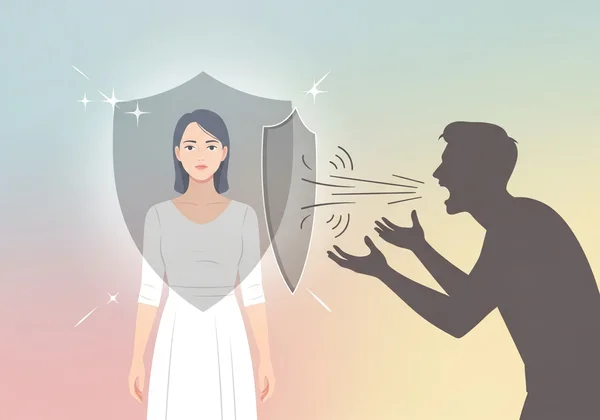
Narcissists thrive on emotional reactions (drama). If you cry, yell, or defend yourself, you are feeding them supply. To Go Gray Rock:
- Keep your face neutral.
- Give short, monotonous answers ("Okay," "I see," "Mmhmm").
- Do not offer personal information or emotions.
- Disengage physically as soon as possible.
When you stop providing the emotional reaction they crave, they often get bored and look for drama elsewhere.
Script Cards: Exactly What to Say to Disarm Him
When you must speak, use neutral, non-defensive language. Here are some scripts to keep in your back pocket:
| He Says... | You Say... | Why It Works |
|---|---|---|
| "You're crazy/sensitive." | "I hear your perspective." | You aren't agreeing, but you aren't fighting. |
| "You never support me." | "I'm sorry you feel that way." | Validates his feeling without accepting blame. |
| "This is all your fault." | "I have a different memory of that." | States your reality without inviting a debate. |
| Baiting/Insults | "I'm not willing to discuss this when you're yelling." | Sets a boundary and exits the interaction. |
Stop Explaining: Avoiding the "JADE" Trap
In a healthy relationship, explaining your point of view leads to understanding. With a narcissist, it gives them ammunition.
Remember the acronym JADE: Do not Justify, Argue, Defend, or Explain.
- Don't: "I didn't answer the phone because I was in a meeting!" (Defending)
- Do: "I was busy." (Statement of fact)
Handling Specific Manipulation Tactics: Silence and Subtlety
Not all narcissistic abuse is loud. Some of the most painful tactics are quiet and passive-aggressive.
When He Ignores You: Surviving the Silent Treatment
The silent treatment is a form of punishment designed to make you feel invisible and desperate for his approval. It triggers abandonment fears.
How to handle it: Do not chase him. Do not apologize just to end the silence. Go about your life as if he isn't there. Enjoy the peace and quiet. When he sees that his silence doesn't control your mood, the tactic loses its power.
The Covert Narcissist Husband: Spotting the "Professional Victim"
A covert narcissist husband is different from the arrogant show-off. He might appear shy, self-deprecating, or misunderstood.
- The Victim Mentality: The world is always against him. If he fails at work, it’s the boss’s fault.
- Passive Aggression: He “forgets” to do things important to you or gives backhanded compliments.
- Guilt Tripping: "I guess I'm just a terrible husband then," forcing you to comfort him.
Living With a Narcissist: Survival Rules for Long-Term Sanity
If you are staying in the marriage for now—whether for children, finances, or personal reasons—you need a survival plan.
The Reality Anchor: Documenting Facts to Fight Gaslighting
Keep a private journal (digital or physical, but secure). Write down arguments, specific quotes, and events immediately after they happen. When he later claims, "I never said that," you can check your reality anchor. You don't need to show him the journal; it is for your sanity.
Financial Independence: Protecting Your Assets Quietly
Financial control is a common tool for narcissists. To effectively manage how to deal with a narcissist husband, you must maintain some autonomy. Use this safety checklist:

- Open a Separate Account: Start a bank account in your name only at a different bank. Opt for paperless statements sent to a secure email.
- Copy Essential Documents: Make digital copies of deeds, titles, tax returns, and birth certificates. Store them in the cloud.
- Monitor Your Credit: Check for loans or credit cards opened in your name without permission.
- Save Cash: Keep a small emergency fund of cash in a safe place he cannot access.
Building a Support System (And Protecting the Kids)
Isolation is the narcissist's best friend. Reconnect with friends and family he may have driven away. Join a support group. If you have children, be their stable emotional base. You cannot stop his behavior, but you can model empathy and healthy boundaries for them.
The Hard Truth: Can a Narcissistic Husband Ever Change?
This is the question every partner asks. The hope that he will return to the charming man you fell in love with is powerful.
Understanding "Narcissistic Supply" vs. Real Love
Narcissists view people as objects to provide supply (admiration, sex, service, status). They often struggle to feel genuine, selfless love. Their "good behavior" is usually transactional—a coin put in the machine to get what they want.
Why Couples Therapy Often Fails (and Can Be Dangerous)
Traditional marriage counseling assumes both partners share the goal of mutual understanding. A narcissist often uses therapy to:
- Charm the therapist.
- Paint you as the unstable one.
- Learn better vocabulary to manipulate you ("You're triggering my trauma").
Individual therapy for yourself is usually far more beneficial than couples counseling in these dynamics.
Prioritizing the Only Person You Can Control: Yourself
You cannot fix him. You cannot love him into being empathetic. You can only control your own reactions, boundaries, and choices.
Start by reclaiming your reality. Use the tools available to you. If you are ready to gain a clearer picture of these behavioral patterns, take our Narcissistic Traits Assessment. It’s a safe, private step toward understanding what you are up against.
Your mental health matters. Whether you choose to read more about narcissistic test results or plan an exit strategy, the path to peace begins with seeing the truth.
Frequently Asked Questions About Narcissistic Partners
How do I shut down a narcissist husband during an argument?
Stop engaging emotionally. Use the "broken record" technique by repeating a neutral phrase like "I understand that's how you feel" without adding new information. Then, physically leave the room.
What are the biggest weaknesses of a narcissistic husband?
His biggest weakness is his fragility. He is terrified of being exposed as ordinary or flawed. Indifference—not hate—is his Kryptonite. When you stop reacting, he loses his power over you.
Can a narcissist truly love his wife?
Narcissists often feel a form of attachment or possession rather than mature love. They love how you make them feel (admired, taken care of) rather than loving you for who you are as a separate person.
How do I protect my children from a narcissistic father?
Be the empathetic parent. Validate their feelings ("I know Daddy got angry, and that was scary. It wasn't your fault."). Do not badmouth him, but do not gaslight them by pretending his behavior is normal.
Is it better to leave or stay?
This is a deeply personal decision. Leaving a narcissist is high-risk and requires careful planning. Staying requires strong boundaries and emotional detachment. Prioritize your physical safety above all else.
- Important Safety Note: If you are in immediate danger, please contact the National Domestic Violence Hotline (800-799-7233) or local authorities for support.